20 Free Ways For Deciding On Anti-Termite Control Services In Jakarta
Wiki Article
The War For Jakarta's Mud Tubes And Moisture
Jakarta exterminators scrape mud tubes from foundation walls each day and refer to it as termite control. It is not. It's just a matter of cleaning up. The mud tubes are not an enemy. They're evidence. The tunnels in the earth were not made by termites since they love construction. They create these earthen corridors due to the fact that they are water bags encased with cuticles that can dry out within a matter of minutes if humidity drops below 70 percent. Every mud tube clinging to a Jakarta's wall is a secret. This tube shows exactly the places where moisture is leaving the structure. The colony can re-infest next door if you use termite-control treatments that poison the tube, but don't address the moisture issue.
1. Mud Tubes Are Hygrometers, Not Highways
Termites place soil particles in areas with the highest transpiration. A tube that is ascending up an exterior bathroom wall suggests that vapor has escaped from the mortar joint. A tube emerging near the slab's edge suggests that the ground below is not yet saturated. The exterminator becomes an expert in building performance when he interprets the tubes instead of as invasion routes. This is more lucrative work. The amount you charge will be based on the value of your work.
2. Twelve Percent Is the threshold for Invisibility
Foraging termites can't see wood with a moisture level below twelve percent. Above fifteen percent, it emits detectable volatile compounds. Most homes in Jakarta comprise wood that has never dried and crossed this threshold several years in the past. The anti-termite products that do not have pin-type moisture meters or measure every door frame, window sill, and beam embedded are making guesses. The clients will be charged for certainty.
3. The 300 to 500mm Moisture Belt
The soil directly in front of the foundation walls is protected by roof eaves, and is significantly drier than open garden soil. Termites feed in the portion of the belt that is between 300-500 millimeters (or less) from the structure. The distance is the right one for termites to gain access to the foundation, but not allow them to get submerged by rain. The hydrological deserts are equipped with bait stations placed close to the wall. Professional installation requires the measurement and placement of stations near termites' foraging areas.
4. Potting Mix Technology is an excellent Bait Station
A potting mix with an organic content that is high, that is soaked in water and then filled around the bait station, creates an artificial shadow of moisture that enhances the appeal of the station beyond its physical place of operation. The urban clay of Jakarta is compacted and isn't porous enough to be used by termites as well as the organic content they require. Exterminators who put stations in natural soils that are not modified are creating furniture rather than traps. The hole should be made to be larger. The soil must be brought in. Moisture must be artificially raised.
5. Above-Ground stations exploit tube behaviour
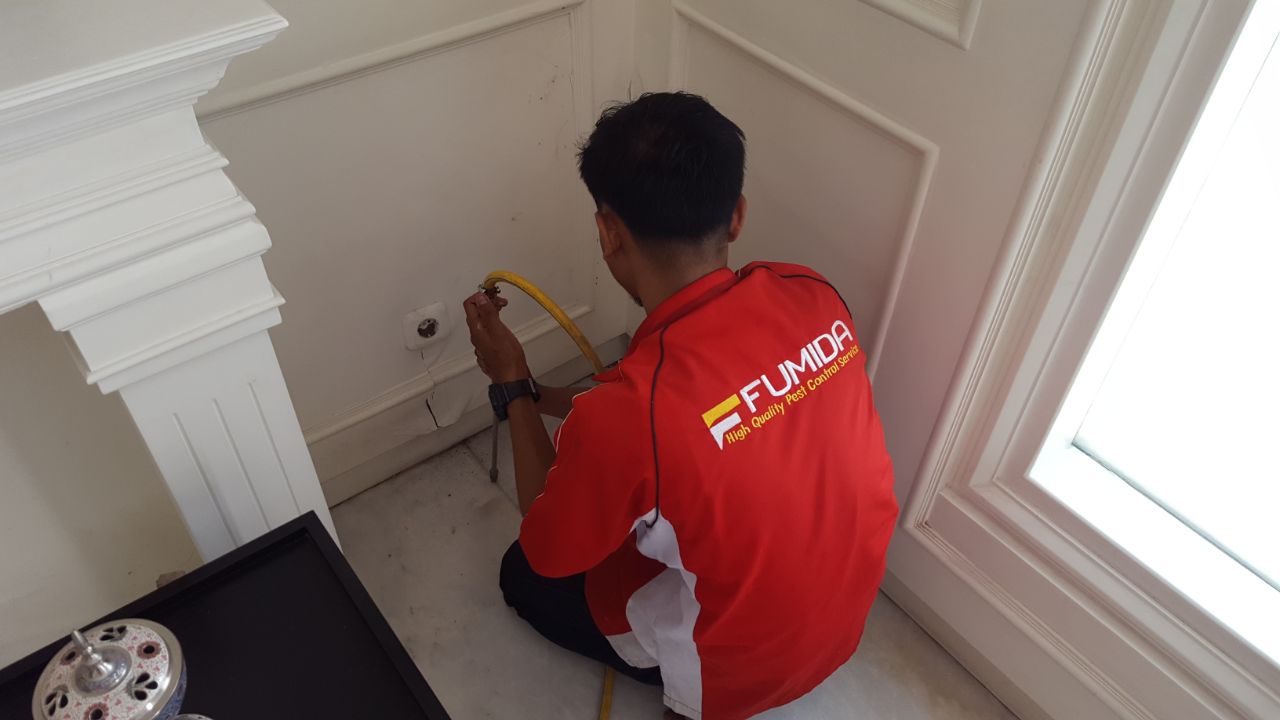
Above-ground stations are locked directly to mud tubes in use. The termites are forced, during their daily travel between feeding and nest spots to travel through a toxicant-impregnated matrix. This is not baiting; it's toll collection. The tube is in good condition, the termites keep on traveling and each forager delivers poison back to the colony nucleus. The squatters who destroy tubes before placing stations eliminate their own delivery infrastructure.
6. Water is a attracting substance and Not a Repellant
US Patent 6023879 was issued in 2000. It outlines the transfer of water into the soil around bait stations, resulting in an increased moisture content than nearby areas. This actively attracts termites to toxicants. Twenty-five years later, Jakarta exterminators continue to believe moisture is a deterrent to ants. However, it is not. It is not. Exterminators do not irrigate bait arrays and are instead waiting for termites.
7. Lawns are Termite Deserts
Turfgrass is treated with chemicals, pesticides and herbicides that reduce the activity of termites. The mulched, rich in organic matter, planting beds in landscapes sustain termite pressure. The anti-termite system that evenly disperses monitoring stations across property, regardless of the ground cover, has the effect of putting stations in sterile turf as well as under-sampling areas that pose a high risk. Grids should be focused on areas where termites are a problem.
8. Self-Recruitment can increase the effectiveness
Moving live termites to a dampened cartridge from a monitoring station infested with termites induces self-recruiting behavior. The termites that are introduced, already acclimated to the surroundings of the station, start feeding immediately and begin to recruit nestmates via trophallaxis. This single step increases the amount of toxicants consumed by about thirty percent. Jakarta exterminators that eliminate termites from monitoring stations, are depleting their effectiveness.
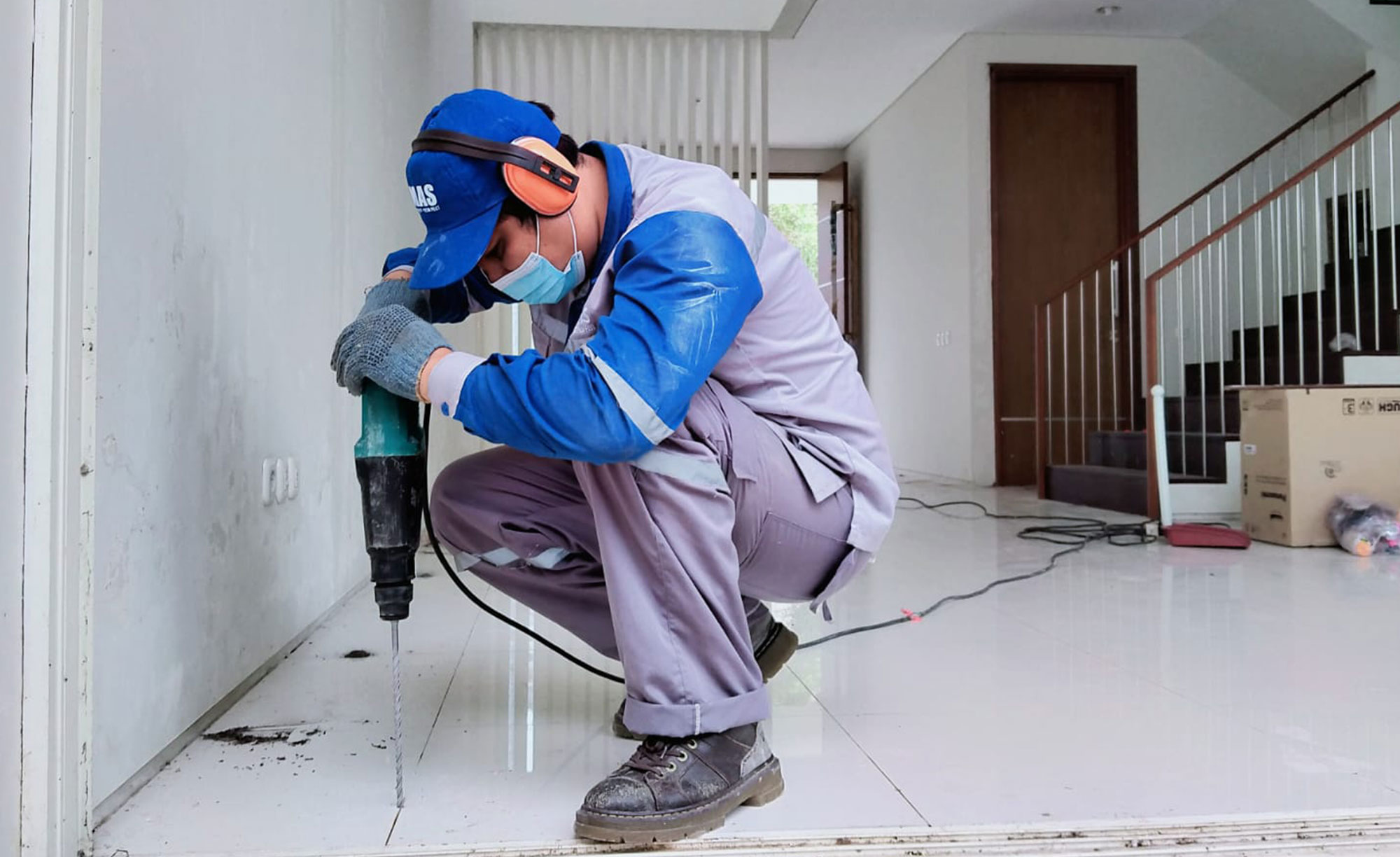
9. Concrete Coring Is Non-Negotiable
Sealed hardscape--driveways, patios, sidewalks--prevents rainfall infiltration and creates artificial dry zones beneath the building perimeter. Professionally developed methods require core drilling in concrete to create bait stations in the underlying soil, then fitting stainless steel caps flush with finished grade. By avoiding coring due to homeowner resistance, anti-termite providers accept that up to 50 percent of the perimeter will be not treated. Document the limitation. Do not accept contracts that require you to circumvent the limitation.
10. Scraping tubes for cosmetic purposes is a good idea
Pest control firms try to convince homeowners that the mud tubes that appear on the soil's surface are the actual problem and that removal would help to treat the issue. They aren't. It's not true. Homeowners use exterminators to eliminate colony, not wall cleaning. Jakarta anti-termite service providers that distinguish between cosmetic maintenance and colony elimination will dominate this high-end segment.
Jakarta's battle against moisture and mud tubes is not a battle against termites. It's a fight against physical science. Jakarta's structural flaws, drainage failures and soil chemistry problems are not the fault of termites. Anti-termite services that position themselves as building performance consultants--arriving with moisture meters, core drills, irrigation tubing, and soil amendments--will win heritage contracts, high-value residential clients, and commercial property portfolios. If the services continue to scrape tubing and sell pesticides like 1995 were the year of their choosing, they will only be competing on the price. The moisture gradient is measurable. The irrigation method is 25 years old and patent protected. The decision for Jakarta exterminators is not the question of whether or not to use these methods. The issue is not whether or not to use the methods but rather if they will do so before or after competitors. Read the best jasa anti rayap for blog examples including jasa anti rayap surabaya, pembasmi rayap kayu, kitchen set anti rayap, jasa anti rayap surabaya, kayu yg tidak dimakan rayap, penyebab rayap di lemari, rayap pekerja, kayu yg tidak dimakan rayap, pest control jakarta selatan, kayu yg tidak dimakan rayap and more.
Baiting Above Ground For Asian Subterraneans In Jakarta
Jakarta homeowners think termite poisoning involves digging bait stations made of plastic in their gardens. A technician inspects them every few months, takes a look, shrugs and then moves forward. This is perimeter surveillance, not colony elimination. Aboveground baiting needs a different approach. The station isn't placed in the ground. Rather, it is attached or pressurized to active mud tubes. The bait is not hidden and is inserted directly into the termites' daily commuting route. For Asian subterranean species--Coptotermes gestroi, Coptotermes curvignathus, Microtermes insperatus--above-ground delivery bypasses every behavioral barrier that makes perimeter baiting slow and uncertain. Jakarta antitermite companies do not have above ground stations in their vehicles. They do not have equipment for treatment, but only inspection.
1. Active Infestation is Required for Above-Ground Stations
The baiting of perimeters is based on speculation. Stations are set up and technicians wait for termites to find them. Above-ground baiting relies on confirmation. Station is only used after mud tube or damaged timber has been located. It's not a problem, it's efficiency. Plastic is not buried in soil after it has been sterilized. Technicians are not able to sit for hours watching stations that never get hit.
2. The Mud Tube as a Delivery Infrastructure
Stations are designed for above ground use, to blend into existing construction. The base of the station forms an enclosed space above the mud tube. Termites traveling from the nest to the feeding site can pass through the station and encounter the bait matrix they eat as they continue their travels. The tube is not damaged. The commuter patterns are not disrupted. The colony contaminates its own infrastructure.
3. For Above-Ground Deliveries Test for Palatability is Different
The termite-killed wood is already passing the colony's screening for palatability. The feeding site is confirmed. The aboveground bait matrixes can be only acceptable and not the most appealing. The formulation is relaxed and toxicants may be added that are slower acting that would otherwise be discarded due to their competition with untreated wood surfaces. Jakarta exterminators must carry multiple formulations of baits to choose according to the feeding preferences that is observed at specific locations of infestation.
4. Recruitment Multiplier through Self-Seeding
Transferring live termites from the infested timber into the above-ground station's recruitment chamber triggers immediate feeding initiation. The termites that are introduced have already become familiar with local environmental conditions as well as foraging patterns and nestmate recruitment, start consuming the bait and recruiting others nestmates by using trophallaxis. This single action increases the rate of delivery of toxicants by about 30 percent. The biological resources are destroyed when termites are destroyed by exterminators by scraping them from damaged wood.
5. Coptotermes verstroi responds quickly to above-ground placement
Coptotermes gestorii, specifically, Asian subterranean termites are active all year round. Above-ground stations located on active infestations show regular feeding in 48 hours and quantifiable consumption of bait within a week. The timeframes for removing colonies is decreased from months to weeks. Services that offer a timeframe of six months for baiting aboveground may be using a suboptimal matrix or may not be transferring the termites they are attracting.
6. The place of macro- and micro-terms is different
The termites responsible for causing fungus (Microtermes Macrotermes, Microtermes and Macrotermes gilvus) don't build mud tubes as extensively as Coptotermes. They hunt above ground in a more diffuse manner, and feeding areas of these termites can be hidden inside wood. For above-ground baiting it is essential to remove the damage area and then insert the mat directly into the feeding cavities. Station geometry is different. Jakarta exterminators who try Coptotermes Protocols on Microtermes will notice poor uptake.
7. Moisture Conditioning Is Non-Negotiable
Water activity levels are used for the production of above-ground bait matrices. The high humidity in Jakarta exchanges moisture with the air. Bait that sits in a toolbox of a vehicle for weeks desiccates; bait removed from its sealed packaging and left exposed on site absorbs the atmospheric moisture and could cause deterioration. Exterminators should condition bait cartridges before installing and add water to the measured level for an optimal water content. They should also shield the unopened stock from Jakarta's constant humidity.
8. Inspection Frequency Compresses
The inspection cycles for the program of perimeter baiting are scheduled for quarterly or bi-annual. Aboveground baiting occurs on a weekly basis. The bait is consumed quickly by active infestations. Cartridges that are depleted need to be replaced in a matter of days instead of months. Elimination of colonies is only confirmed after feeding ceases and the the mud tubes dehydrate. If the service plans to monitor above ground baits on their normal perimeter monitoring timeframe, they may miss out on colony recovery since they won't see any bait and believe that treatment has improved.
9. Certain warranties require different underwriting
Perimeter-baiting warranty prices are based according to station density and inspection frequencies. The cost of baiting above ground warranty is determined by the species, extent of infestation, and the complexity. One Coptotermes enterosus colony passing through the threshold of a door is covered at the standard rate. Microtermes infestations that spread across the entire ground require different risk models. Jakarta Anti-Termite Service providers that use the same pricing for warranty for each scenario are not correctly pricing risks.
10. Above-Ground is diagnostic and not just therapeutic
This information could provide insights into the state of health of colonies. Consumption is rapid in a colony with a high resource demand. The abandonment of the colony after consumption signifies its removal. Mud tubes that darken indicate less traffic. The termite control specialists who are trained to detect these signs can change treatment parameters immediately. Pesticides who exchange cartridges and then leave the area are not utilizing this most effective method of treatment for termites that is based on data.
You can also read our conclusion.
Baiting above ground of Asian subterraneans to eradicate colony is not an additional service. It is the method that differentiates inspection companies from colony eradication specialists. Perimeter baiting monitors. Above-ground baiting treats. Perimeter Baiting awaits to be discovered. Above-ground baiting engineers are faced with challenges. Perimeter baiting produces quarterly service orders. Above-ground colony elimination is accomplished by using above-ground baiting. This results in warranty renewals and the complete elimination of colonies. Jakarta anti-termite service providers that delay the adoption of above-ground strategies typically blame costs for equipment, technician training requirements or the inconvenience carrying multiple bait matrices. They're not barriers that need to be overcome, but rather the cost of investment. The cost of equipment will be recouped during the first three above-ground deployments. The training investment pays dividends for retention as technicians move from generalist applicators to specialists. Multiple bait matrixes differentiate premium exterminators from commodity ones. Homeowners with termite infestations that are active are not interested in monitoring their perimeters. They just want to kill the colony. Above-ground trapping is the most direct way to get there. Every day that a Jakarta exterminator works on scraping tubes and injecting soil without deploying above-ground stations is a day the colony keeps eating. Take a look at the recommended anti rayap jakarta for website info including rumah rayap, pembasmi rayap, jasa anti rayap jakarta, jasa basmi rayap, rayap kecil, pembasmi rayap, jasa pembasmi rayap, jasa anti rayap tangerang, rayap adalah, basmi rayap and more.